
Tobacco Farming in Malawi: Burley Market Guide & Machinery Recommendations 2026
Malawi is one of the world's most tobacco-dependent economies and a leading exporter of burley leaf. This guide covers Malawi's tobacco market, growing regions, farming calendar, key challenges, and the machinery that fits Malawian farms.
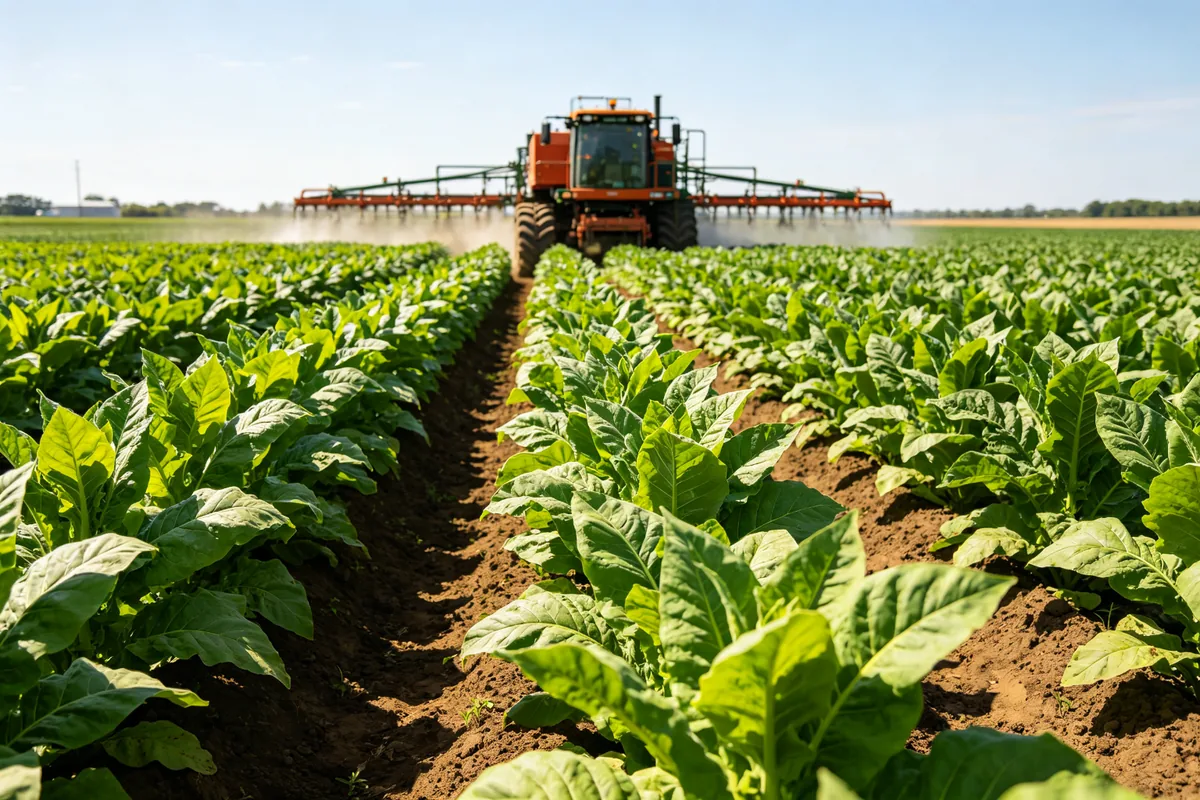
1. Why Malawi Tobacco Matters
Malawi is consistently ranked among the world's top burley tobacco producers and the crop sits at the center of the country's economy. Tobacco is Malawi's single most important export crop, and hundreds of thousands of farming households across the country depend on it for their livelihoods — from smallholder growers to large estate operations.
Malawian burley is prized by international cigarette manufacturers for its filling capacity and neutral burning characteristics, which make it a versatile blending component. Buyers include major leaf merchants and manufacturers across Europe, Asia, and the Americas.
Key Market Facts
- Main type: Burley (air-cured), with flue-cured and fire-cured in smaller volumes
- Farmers: Tobacco supports a very large share of Malawi's rural households
- Marketing: Auction floors (Lilongwe, Mzuzu) + contract farming schemes
- Regulator: Tobacco Commission
- Economy: Tobacco is one of Malawi's largest foreign exchange earners
2. Major Tobacco Growing Regions
Malawi's tobacco is concentrated on the Central Region plateau, with distinct production systems in the north:
- Kasungu — The heartland of Malawi burley production
- Mchinji, Dowa & Ntchisi — Dense smallholder burley belt around the Kasungu plain
- Salima & Lakeshore areas — Emerging production zones
- Rumphi & the Northern Division — Known for flue-cured and fire-cured tobacco
3. Tobacco Farming Calendar in Malawi
Malawi has a single rainy season (November–April), and the entire tobacco calendar is built around it:
August–October: Seedbed & Land Preparation
Farmers raise seedlings in seedbeds and prepare land. Because the transplanting window is short, land preparation and ridging are often rushed — a major bottleneck that machinery can relieve.
October–December: Transplanting
With the rains established, seedlings are transplanted. Transplanting is the single most labor-hungry operation, and delays of even a week or two measurably reduce yields. Most smallholders still transplant by hand.
December–February: Crop Management
Weeding, topping, suckering, and pest control dominate this period. Dry spells within the rainy season are a recurring threat, making access to irrigation increasingly valuable.
February–May: Harvesting & Curing
Burley is air-cured in well-ventilated sheds over several weeks — very different from flue-curing. Leaves are primed from the bottom up, stitched, and hung to cure until the desired color is reached.
April–September: Marketing
Cured leaf is graded and sold through auction floors or under contract farming arrangements with leaf merchants, which now account for the majority of Malawi's production.
4. Key Challenges Facing Malawian Tobacco Farmers
Labor Bottlenecks at Peak Season
Transplanting, weeding, and harvesting all compete for labor in the same weeks. As rural wages rise, mechanizing transplanting and land preparation is the clearest path to protecting both yield and timeliness.
Climate Variability & Dry Spells
Recent seasons have shown how damaging mid-season drought can be. Diesel water pumps and simple irrigation are becoming standard insurance for serious growers.
Soil Fertility & Continuous Cropping
Tobacco is demanding on soils. Proper ridging, crop rotation, and timely stalk destruction after harvest help maintain long-term productivity and break pest and disease cycles.
Sustainability Pressure
Buyers increasingly scrutinize the environmental footprint of curing. Air-cured burley already avoids curing fuel, and efficient farm machinery further reduces the overall footprint per kilogram of leaf.
5. Recommended Machinery for Malawian Tobacco Farms
Based on Malawi's smallholder-dominant structure and the burley production system, DINGHENG recommends:
Tobacco Transplanter
A tobacco transplanter is the highest-impact investment for the October–December window. It plants 5–10 times faster than hand labor with uniform depth and spacing — critical when every day of transplanting delay costs yield. Compact, tractor-mounted and self-propelled models suit Malawi's field sizes.
Ridger / Bed Former
Well-formed ridges improve drainage in the rainy season and speed up later field operations. A tractor-mounted ridger prepares uniform ridges in a fraction of the time of manual ridging. See our ridger buying guide for selection criteria.
Tobacco Stalk Puller
After the final harvest, stalks and roots must be removed to break pest and disease cycles before the next season. Manual uprooting is slow and exhausting; a tobacco stalk puller uproots whole plants with their root systems in a single pass.
Diesel Water Pump
For dry spells and seedbed irrigation, a portable diesel water pump is essential. Choose adequate lift head for your terrain and prioritize fuel efficiency for long pumping hours.
Mini Tiller / Power Tiller
For seedbed preparation and inter-row cultivation, a compact power tiller is affordable, easy to transport between fields, and ideal for the small plot sizes common in Malawi.
6. Importing Machinery to Malawi
Malawi is landlocked, so the route matters:
- Select equipment: Contact DINGHENG for a machinery package matched to your acreage
- Get quotation: Proforma invoice with FOB or CIF pricing
- Payment: Telegraphic Transfer (TT) or Letter of Credit (LC)
- Shipping: Ocean freight to Durban (South Africa) or Beira / Nacala (Mozambique), then road or rail into Malawi
- Customs clearance: Use a registered Malawian clearing agent and confirm current duty treatment for agricultural equipment
- Delivery: Inland transport to Blantyre, Lilongwe, or your farm
Tip: The Beira corridor is the shortest route to Blantyre, while Durban offers the most frequent sailings from China. Compare both with your forwarder before ordering.
7. Why Choose DINGHENG for Malawi?
- 15+ years of production experience at our partner factory in Shandong
- Proven in China's tobacco sector: That factory supplies equipment into China's state tobacco production system
- Custom builds: The factory's in-house R&D team adapts machines to your row spacing, soil and tractor type
- Tobacco specialization: Equipment designed around the tobacco production cycle
- Factory-direct pricing: Suited to smallholder and estate budgets alike
- Simple, maintainable machines: Field-serviceable designs that don't need dealer networks to keep running
- Spare parts support: Comprehensive parts supply to minimize downtime
- English communication: Smooth coordination with Malawian growers and agents
8. Related Resources
- Tobacco Transplanter Buying Guide: How to Choose the Right Machine
- Tobacco Stalk Puller: Complete Guide to Removing Tobacco Stalks After Harvest
- Tobacco Farming in Zimbabwe: Market Guide
- Tobacco Farming in Vietnam: Market Guide
- Agricultural Water Pump Guide: How to Select the Right Irrigation Pump
Get a Free Consultation
Planning to mechanize your tobacco farm in Malawi? Contact DINGHENG for a free consultation and a machinery package sized to your fields.